
Terraform Best Practices for Reliable Cloud Infrastructure
Terraform best practices for startups and cloud teams: state management, modules, environments, naming, security, reviews, and Infrastructure as Code workflows.
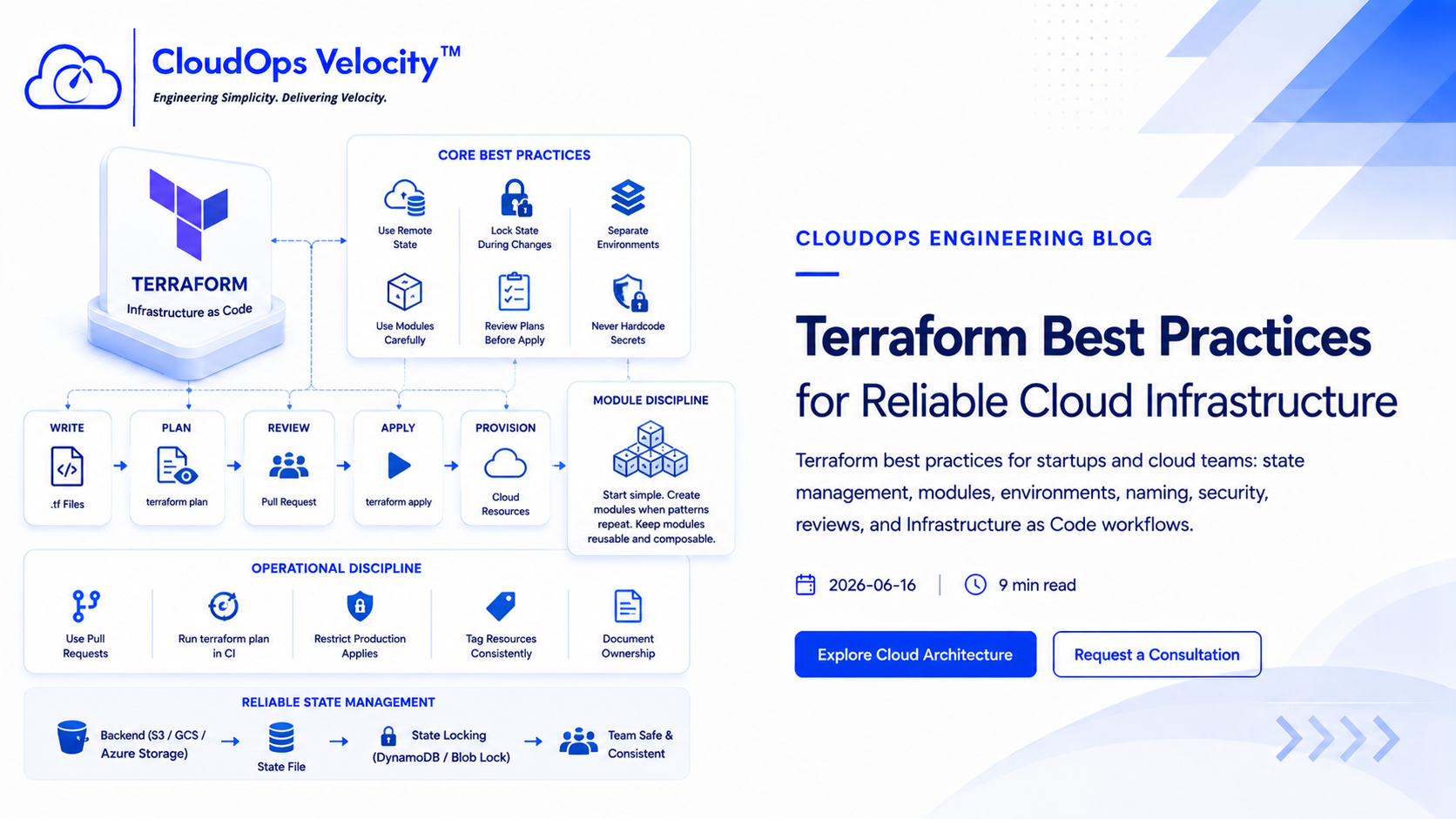
Why Terraform matters
Terraform turns cloud infrastructure into code. This makes infrastructure easier to review, repeat, document, and recover.
Core best practices
Terraform should be treated like production application code.
- ✓Use remote state
- ✓Lock state during changes
- ✓Separate environments
- ✓Use modules carefully
- ✓Review plans before apply
- ✓Never hardcode secrets
Module discipline
Modules can simplify infrastructure, but overusing them too early creates unnecessary abstraction. Start simple, then create modules when patterns repeat.
Operational discipline
Terraform needs process, not just files.
- ✓Use pull requests
- ✓Run terraform plan in CI
- ✓Restrict production applies
- ✓Tag resources consistently
- ✓Document ownership
Ready to put this into practice?
If your engineering team needs help implementing these practices, we're here to help you architect, automate, and scale your infrastructure.
Frequently Asked Questions
Why use Terraform?
Terraform helps teams create repeatable, version-controlled cloud infrastructure instead of making manual changes.
What is the biggest Terraform mistake?
Poor state management is one of the biggest Terraform mistakes because it can break infrastructure workflows.