
Kubernetes Security Checklist for Production
A practical Kubernetes security checklist for production workloads covering RBAC, network policies, secrets, image scanning, pod security, audit logging, and secure CI/CD.
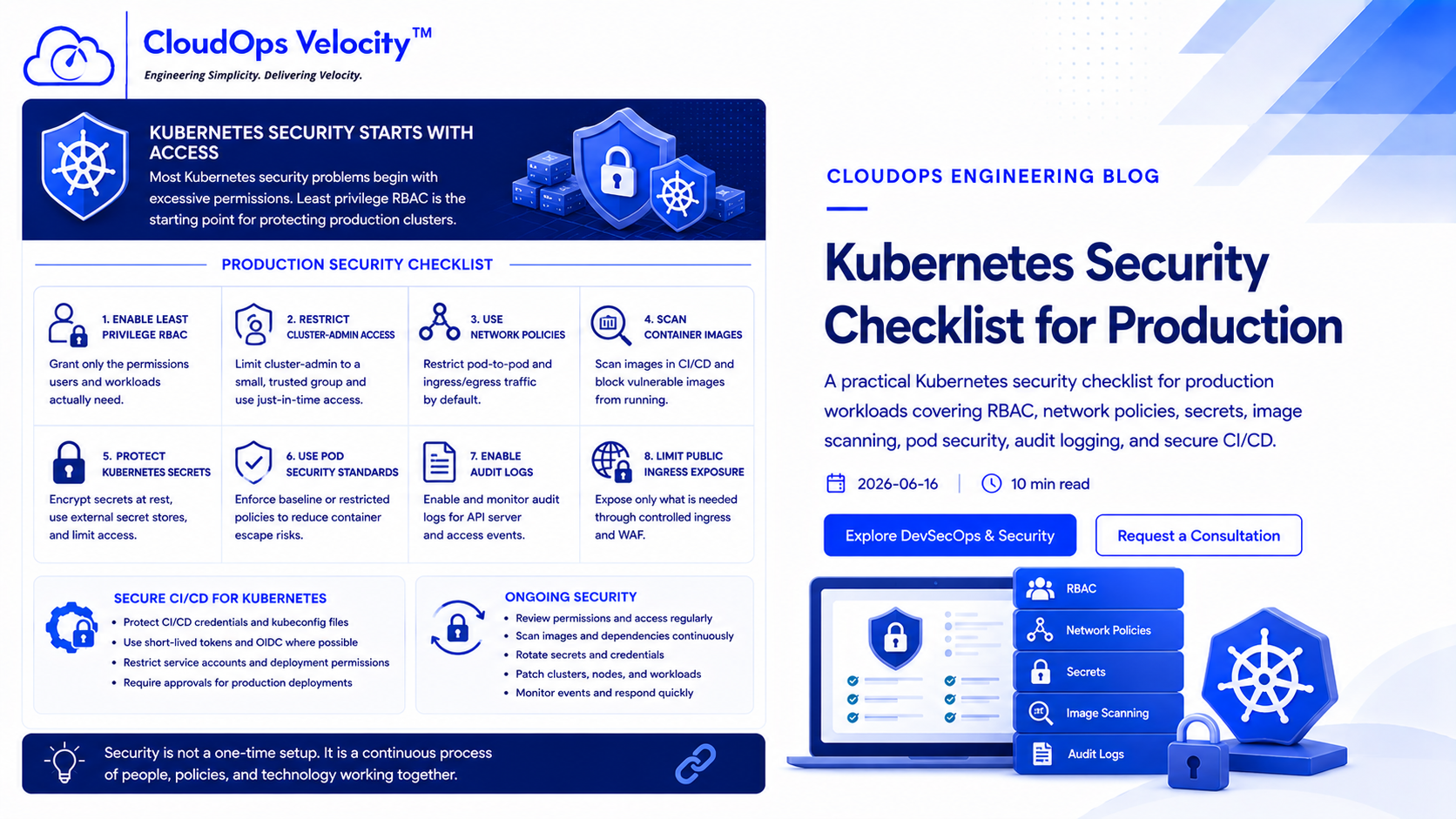
Kubernetes security starts with access
Most Kubernetes security problems begin with excessive permissions. Least privilege RBAC is the starting point for protecting production clusters.
Production checklist
Use this as a practical baseline for Kubernetes security.
- ✓Enable least privilege RBAC
- ✓Restrict cluster-admin access
- ✓Use network policies
- ✓Scan container images
- ✓Protect Kubernetes secrets
- ✓Use pod security standards
- ✓Enable audit logs
- ✓Limit public ingress exposure
Secure CI/CD for Kubernetes
Your Kubernetes cluster is only as secure as the pipeline deploying into it. Protect credentials, deployment tokens, service accounts, and production approval workflows.
Ongoing security
Kubernetes security is continuous. Review permissions, scan images, monitor events, rotate secrets, patch clusters, and keep workloads updated.
Ready to put this into practice?
If your engineering team needs help implementing these practices, we're here to help you architect, automate, and scale your infrastructure.
Frequently Asked Questions
Is Kubernetes secure by default?
No. Kubernetes requires careful configuration of RBAC, networking, secrets, policies, workload permissions, image security, and audit logging.
What is the first Kubernetes security step?
Start with least privilege RBAC, secret protection, image scanning, restricted public exposure, and secure deployment permissions.