
Kubernetes for Startups: When It Helps and When It Hurts
A practical guide to Kubernetes for startups, explaining when Kubernetes is useful, when it is overkill, and how to adopt it safely.
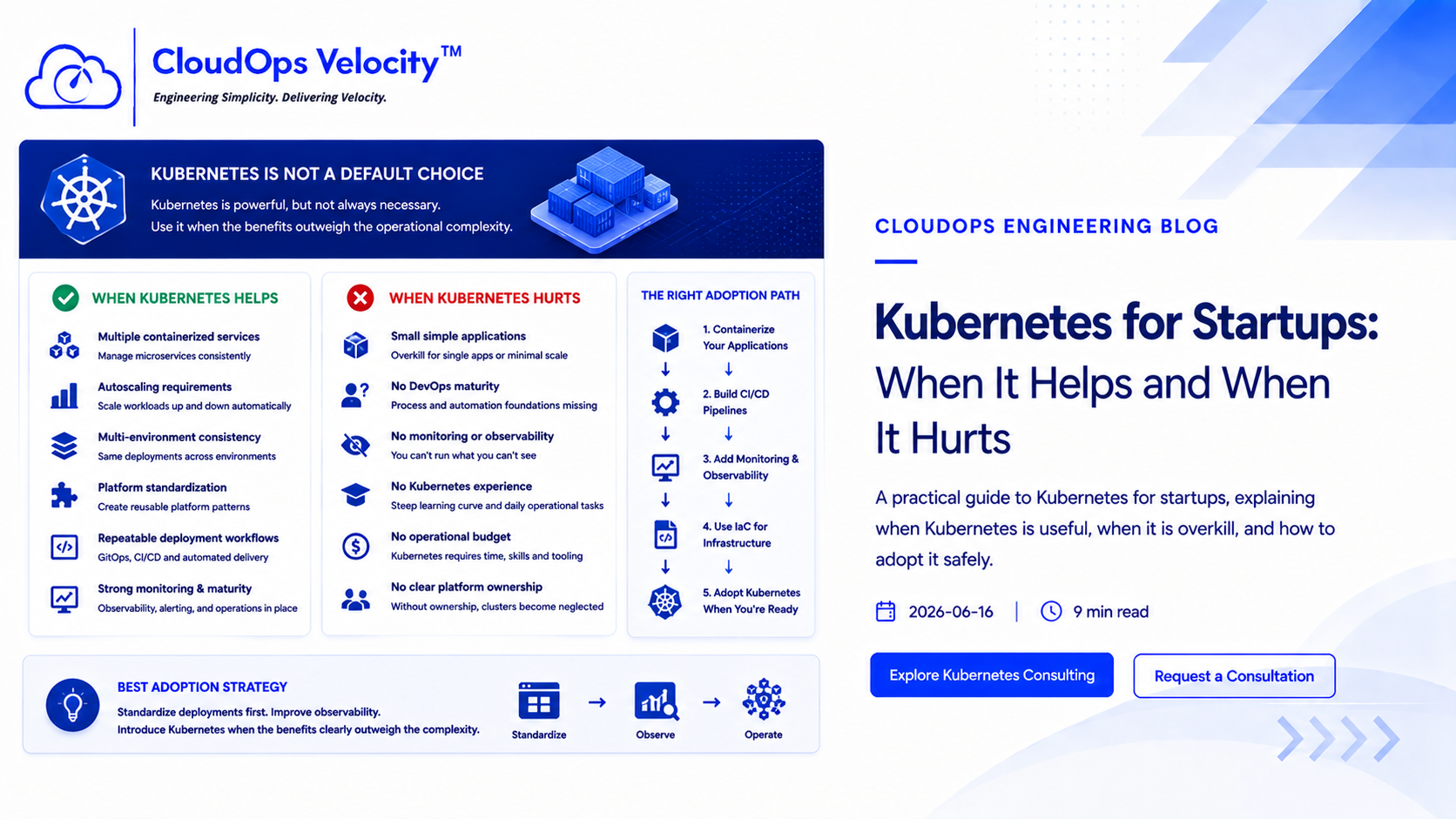
Kubernetes is not a default choice
Kubernetes is excellent for the right workload, but it becomes expensive complexity when adopted too early.
Startups should not use Kubernetes just because it is popular. They should use it when their application architecture, deployment needs, and operational maturity require it.
When Kubernetes helps
Kubernetes can help when teams need consistent deployment, scaling, and platform patterns across multiple services.
- ✓Multiple containerized services
- ✓Autoscaling requirements
- ✓Multi-environment consistency
- ✓Platform standardization
- ✓Repeatable deployment workflows
- ✓Strong monitoring and operational maturity
When Kubernetes hurts
Kubernetes becomes a problem when the team cannot operate it properly.
- ✓Small simple applications
- ✓No DevOps maturity
- ✓No monitoring or observability
- ✓No Kubernetes experience
- ✓No operational budget
- ✓No clear platform ownership
The right adoption path
Start with containers, CI/CD, monitoring, and Infrastructure as Code first. Add Kubernetes only when your product and team are ready for the operational responsibility.
The best Kubernetes adoption strategy is gradual: standardize deployments first, improve observability, then introduce cluster operations when the benefits clearly outweigh the complexity.
Ready to put this into practice?
If your engineering team needs help implementing these practices, we're here to help you architect, automate, and scale your infrastructure.
Frequently Asked Questions
Should every startup use Kubernetes?
No. Kubernetes is powerful, but it adds operational complexity and should match real workload needs.
When should a startup adopt Kubernetes?
A startup should adopt Kubernetes when workloads, scaling needs, deployment patterns, platform requirements, and team maturity justify the added operational complexity.