
DevOps Consulting for Startups: What to Build Before You Scale
Startups do not need enterprise complexity. They need reliable deployments, repeatable infrastructure, monitoring, and a delivery process that does not break every time the product changes.
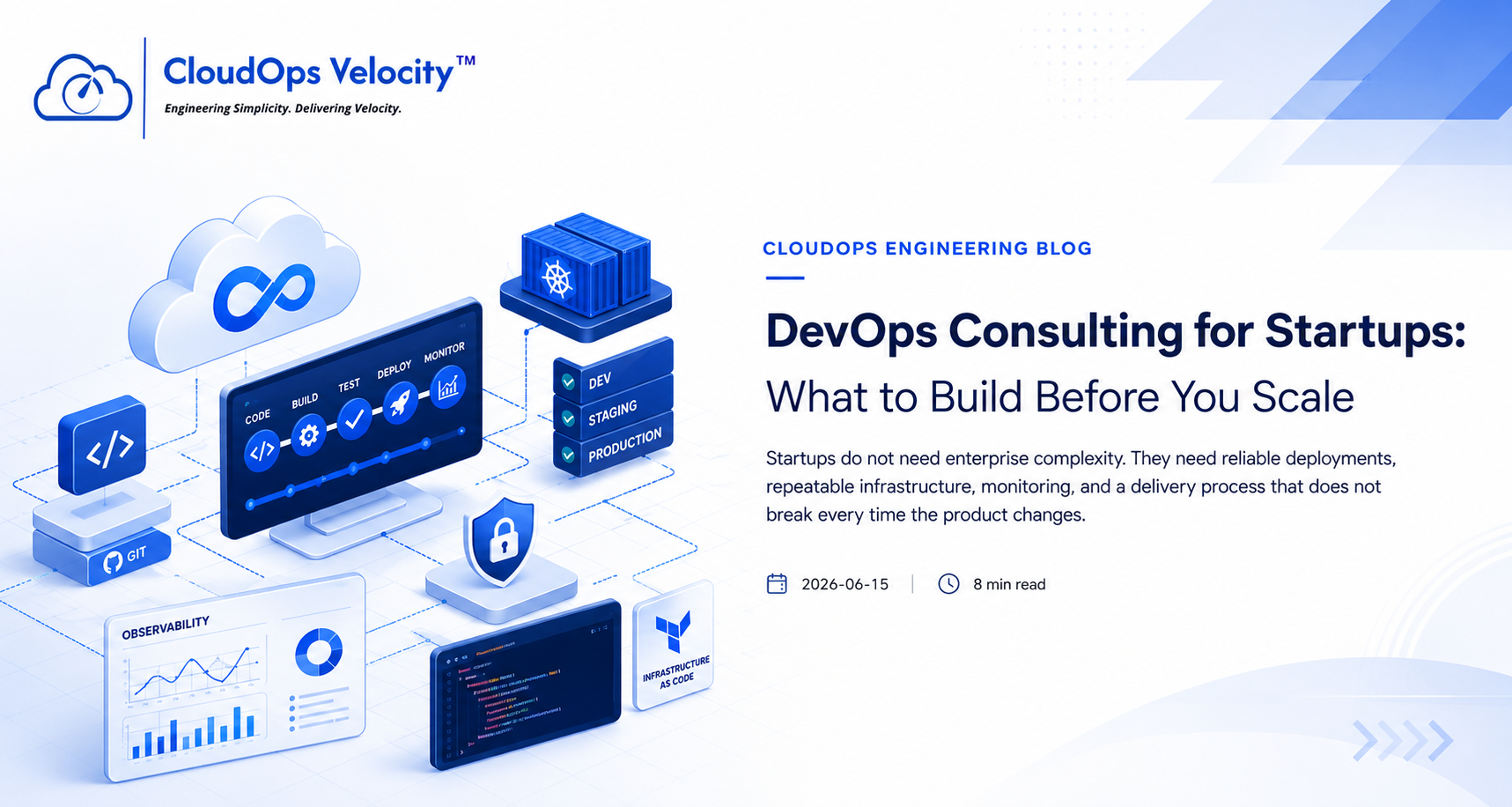
Why DevOps matters early
Most startups begin with speed as the only priority. That is fine in the first few weeks, but as customers arrive, every manual deployment becomes a business risk.
DevOps is not about adding tools for the sake of tools. It is about building a delivery system where engineers can ship safely, recover quickly, and understand what is happening in production.
What startups actually need
A startup does not need a complex platform engineering department on day one. It needs the basics done properly.
- ✓A clean CI/CD pipeline
- ✓Separate dev, staging, and production environments
- ✓Infrastructure as Code
- ✓Rollback strategy
- ✓Monitoring and alerting
- ✓Secrets management
- ✓Basic security checks
Common DevOps mistakes startups make
The biggest mistake is waiting until production is already painful. By then, deployments are fragile, nobody trusts releases, and firefighting becomes normal.
- ✓Manually changing servers
- ✓No rollback strategy
- ✓No deployment approvals
- ✓No observability
- ✓No infrastructure documentation
- ✓Overusing Kubernetes too early
The right startup DevOps roadmap
Start simple. Automate builds and deployments first. Then standardize infrastructure. Then add monitoring, security, and scaling.
A good DevOps roadmap should reduce engineering friction, not create more meetings, dashboards, or tools nobody uses.
Ready to put this into practice?
If your engineering team needs help implementing these practices, we're here to help you architect, automate, and scale your infrastructure.
Frequently Asked Questions
When should a startup invest in DevOps?
When deployments become slow, risky, manual, or dependent on one engineer.
Do startups need Kubernetes immediately?
No. Kubernetes is useful only when workload complexity justifies it.