
CI/CD Pipeline Best Practices for Startups
A practical guide to CI/CD pipeline best practices for startups, covering automation, testing, deployments, rollback, security, and release reliability.
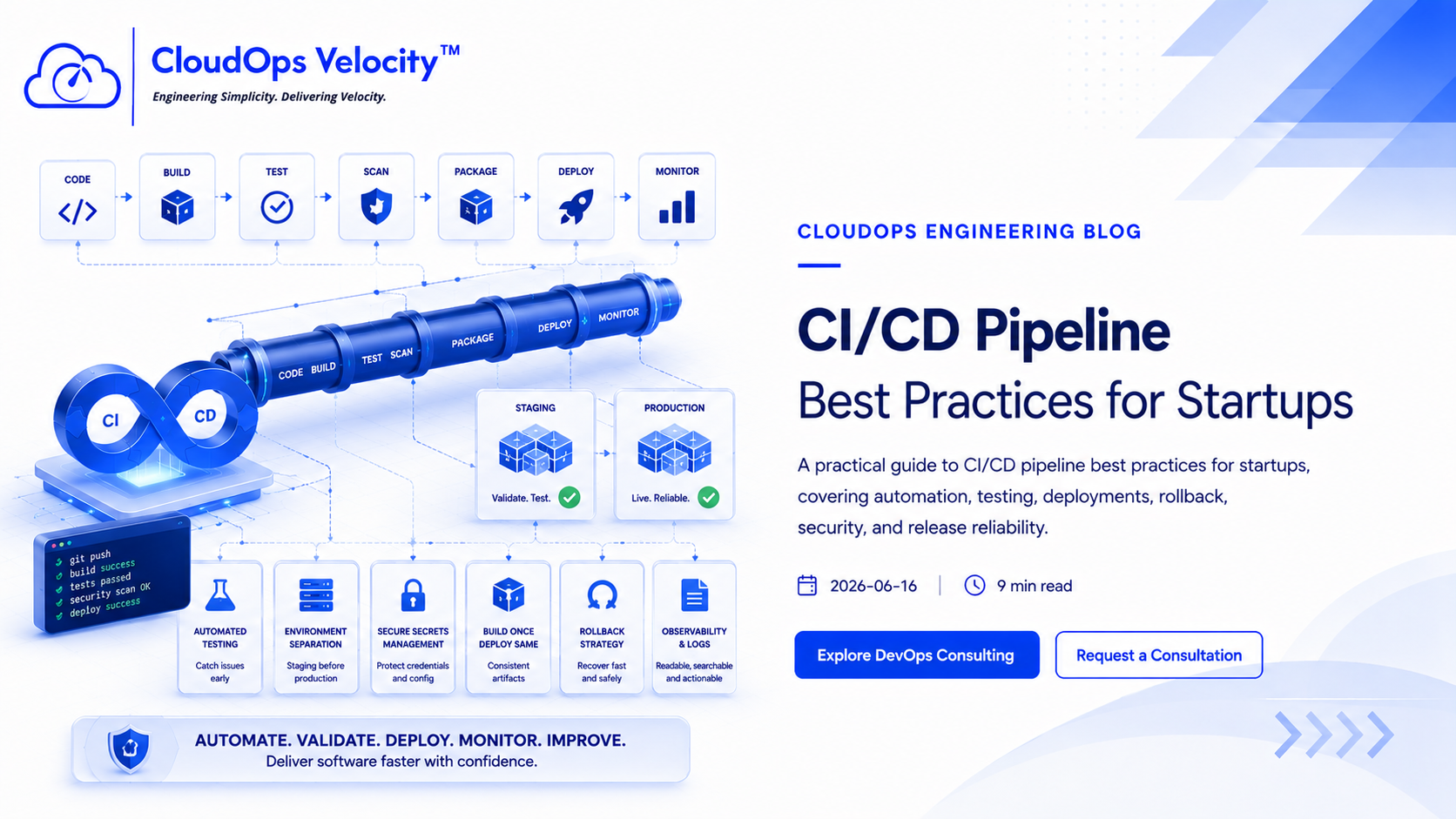
Why CI/CD matters
CI/CD is the backbone of modern software delivery. Without automation, releases depend on manual effort, increasing deployment risk and slowing engineering teams.
For startups, a well-designed CI/CD pipeline enables faster feature delivery while improving software quality and operational reliability.
Best practices to follow
Your CI/CD pipeline should be predictable, repeatable, secure, and easy to troubleshoot.
- ✓Run automated tests before deployment
- ✓Use separate staging and production environments
- ✓Store secrets securely outside source code
- ✓Build once and deploy the same artifact
- ✓Implement rollback and recovery strategies
- ✓Keep pipeline logs readable and searchable
Common mistakes
Many CI/CD failures come from unnecessary complexity or skipping essential engineering practices.
- ✓Deploying directly from developer machines
- ✓Skipping staging validation
- ✓No approval workflow for production
- ✓Mixing build and runtime configuration
- ✓No monitoring after deployment
What good looks like
A mature CI/CD pipeline allows engineers to deploy confidently, recover quickly from failures, reduce manual effort, and continuously deliver reliable software.
Ready to put this into practice?
If your engineering team needs help implementing these practices, we're here to help you architect, automate, and scale your infrastructure.
Frequently Asked Questions
What should a CI/CD pipeline include?
A strong pipeline includes build, automated testing, security checks, artifact creation, deployment automation, monitoring, and rollback capability.
Do startups need complex CI/CD?
No. Startups benefit most from simple, reliable pipelines that reduce deployment risk while enabling fast releases.