
AWS Savings Plans vs Reserved Instances: What Should You Choose?
Understanding how to commit to AWS pricing without locking yourself into expensive, inefficient infrastructure.
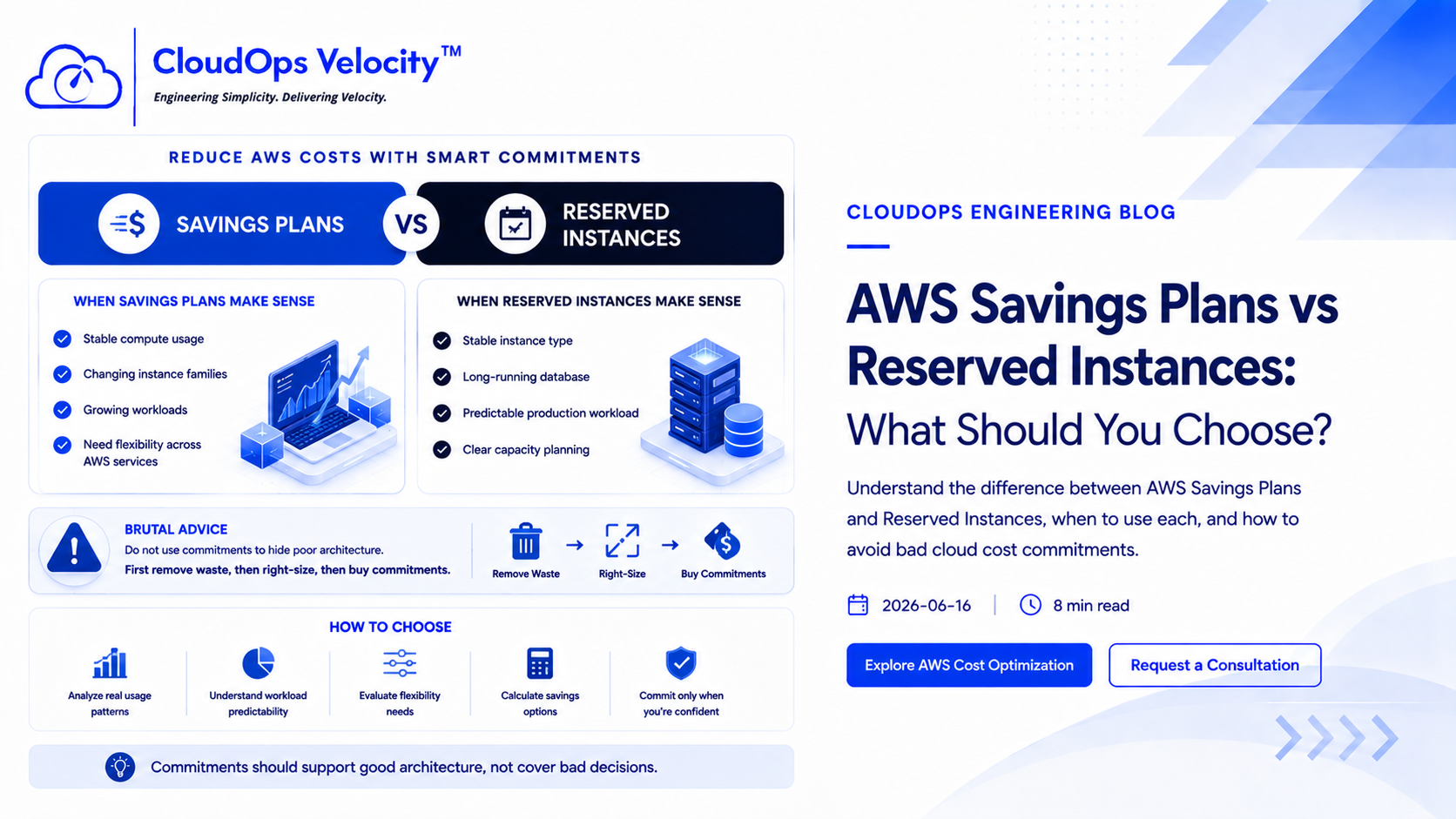
The basic difference
Savings Plans and Reserved Instances both reduce AWS costs in exchange for usage commitments.
The mistake is buying commitments before understanding your real usage pattern.
When Savings Plans make sense
Savings Plans are useful when you want flexibility across compute usage.
- ✓Stable compute usage
- ✓Changing instance families
- ✓Growing workloads
- ✓Need flexibility
When Reserved Instances make sense
Reserved Instances can work well for very predictable workloads.
- ✓Stable instance type
- ✓Long-running database
- ✓Predictable production workload
- ✓Clear capacity planning
Brutal advice
Do not use commitments to hide poor architecture. First remove waste, then right-size, then buy commitments.
Ready to put this into practice?
If your engineering team needs help implementing these practices, we're here to help you architect, automate, and scale your infrastructure.
Frequently Asked Questions
Are Savings Plans better than Reserved Instances?
Savings Plans are more flexible for many workloads, but Reserved Instances can still make sense for specific predictable usage.
Should startups buy commitments early?
No. Startups should wait until usage patterns are predictable.